French Family Association
The Official Website of the Surname French
Berkeley County, West Virginia
The boundaries of old Frederick County today encompasses 12 counties:
Frederick, Clarke, Warren, Shenandoah, and Page counties in Virginia; and
Jefferson, Berkeley, Morgan, Hampshire, Mineral, Hardy, and Grant counties in
West Virginia.
Chart #195, Jacob French (1st), ca. 1705
Antrim twp, Cumberland Co., (now Franklin Co.), PA
Berkeley Co., VA (now WV)
Urbana, Champaign Co., OH
Enterprise, Wallowa Co., OR
Introduction
This chart updated by Mara French on 7/27/12. Numbers in brackets [ ] show sources and refer to the Bibliography. Send any corrections or additions to this chart to marafrench@mindspring.com. Revisions: 2009, 2011, 2012.
Links to Other Websites
French
Family Chronology, 1710-1826
Land
Owners in Washington Co., MD
FFA Chart #195 Home Page Topics
French Reunion for Jacob French Families
FFA Charts for DNA Test Group 4
á DNA Test Group 4 Test Results (old website)
á DNA Test Group 4 Test Results (new website)
á DNA Test Group 4 Cross-Reference Chart
á DNA Test Group 4 Descendant Chart to Testee
á DNA Group 4 Spreadsheet by Deb Skoff (.pdf) or (.html)
What is the Origin of the Surname French?
á Was the French Family German or Dutch?
á Was the French Family French?
á Was the French Family from Canada?
á The Snively and French Families Met in Antrim, Pennsylvania
Immigration
of the French Family
á Early Ancestry.com Listings in Pennsylvania
á Oath Taken by Foreigners in 1742
Homesteads
of This French Family
á Cumberland / Franklin County, Pennsylvania
á Washington and Frederick Counties, Maryland
á Berkeley County, West Virginia
Thank you to Deb Skoff [1], Vicki French Carroll [37], and Linda French Dawson [11], who all contributed a significant amount to this chart. Deb and Vicki are both descendants of JacobÕs (2nd) son Henry, and his son George W. French, FFA Chart #31. Linda is a descendant of JacobÕs (2nd) brother George French, FFA Chart #136. As for me (Mara), IÕm fascinated with the hobby of researching the surname French and am a descendant of FFA Chart #6, unrelated to this line. The four of us made a good team in researching Jacob French – each contributed missing pieces that the other ones could not find. I feel so fortunate to have been in this group. -Mara
IÕve researched this line just about all I can from ancestry.com and from the internet searches. Additions need to come from family members or from local books, courthouses, or historians who havenÕt put their information online.
P.S. Although Jacob French is not in my line, I will continue to do research on him as time permits. My line is FFA Chart #6.
Ancestry.com has
noted that various other German surnames could have been anglilcized to the surname French after immigration to the
New World.
Important Note: The FFA has researched most of these names and considers only a very few as possible candidates for the surname French of this line. For further information on the other surname derivatives, see German Surnames.
The surname ÒFrenchÓ could have been spelled Franck, Frasch, Frinch, Friench, Franche, Franch, Freich, Ffrench, Pfrench, Frens, Frensch, Frensche, Francey, Franzšsisch, Jacob, Jaque, Francis Jacobs, Francis Jacques, Rench, Francis, Francois, Fanck, Fersch, Frand, Frank, Frech, Fremt, Funck, or Tench. A large Funk family in the area also consisting of a Henry, Jacob, and John, is not the same one as our French family, see Ref. [52].
Tracy and Brian Potts, 311 Richard St., Martinsburg, WV. 25404-9078. 304-263-1170. French Reunion 2005 Aug 28th, from 12 noon till 6:00 pm. Dinner will be at 1:00 Located at Tuscarora Puritan Club, Martinsburg, WV, behind Tuscarora Church Hall. Please bring a covered dish or picnic lunch and something for auction. Remind Relations!!! Invite relatives!! Bring pictures from past reunions. Come and plan to enjoy the day!! Hope to see you there. Stay tuned for updates of possible future reunions. [Obviously this reunion has already taken place. We hope there will be others.]
FFA Chart #10,
John Peter French and William Lewis French of TN
FFA Chart #23,
Isaac French of Canada
FFA Chart #30,
Louisa French of WV, sister of FFA Chart #195
FFA Chart #31,
Henry French of KY
FFA Chart #129,
Peter French of TN – no test yet
FFA Chart #136,
George French of SC
FFA Chart #186,
Philip French of IN, brother of FFA Chart #206
FFA Chart #193,
David French of KY
FFA Chart #194,
Samuel and George Hedges French of IN
FFA Chart #195,
Jacob French Sr. and Jr. of WV
FFA Chart #206,
Samuel and David French of IN, brothers of FFA Chart #186
The DNA expert and administrator for the surname French is Julia French Wood. Email her about all DNA questions to JuliaFWood@aol.com. For ancestry questions, email marafrench@mindspring.com.
The surname French DNA Group 4 testees are all from Hapologroup G, broken down to include two from G2a and one from G2a3b1a, and nine strickly from ÒGÓ alone.
Test Results (in General):
14 22 15 10 13-14 11 13 12 12 11 30 17 9-9 11 11 24 16 21 32 12-13-13-14 11 11 20-20 15 13 15 18 35-39 11 10 11 8 15-16 8 11 10 14 22-24 15 10 12 12 14 8 13 22 21 19 12 11 14 11 11 11 11
The French DNA Testing is administered by Julia French Wood. For any questions regarding DNA, please email Julia at juliaFWood@aol.com.
A good source for research would be for a male with the
surname French of this line to take the DNA test. It is a simple test that
doesnÕt involve blood. A kit is delivered to your house with special brushes
for you to take cheek swabs and the tip is injected into the tiny test tubes to
be returned to the lab. After the tests that you ordered are completed, in
about 4 weeks, you will be notified and can log in to your personal page at the
company to view your results and your DNA matches. They may match up with one
of the tests shown here: http://www.familytreedna.com/public/french/default.aspx?section=yresults. The FamilyTree DNA website gives a special lower price to those
with the surname French. Read about those who approve of it: http://www.familytreedna.com/testimonials.aspx. To get the
discounted price for our French DNA Project group, go to http://small-stuff.com/FRENCH/DNA/ and click at
the left on "Join the French DNA Project" then place your
order. Julia French Wood suggests the 37 marker
test (Y-DNA37), but if you want to start with 25, you can upgrade to a higher
test at a later date if needed.
We do not know whether this particular French family came from Germany, England, Switzerland, Holland, Scotland, Ireland, Canada, or elsewhere. ItÕs a total mystery to us. Our best knowledge so far is that:
á George French was naturalized in 1747 in Maryland, therefore not a British subject, and that he was naturalized with Germans who were mostly Mennonites. We cannot find any records on the men of the French family prior to 1747; however, his sister Louisa French married John Snively in 1743 in Antrim, PA.
á Most men with the surname French married women from Germany or Switzerland, and they lived in German communities.
á Several of these men with the surname French were Mennonites as they were not allowed to fight in the French and Indian War for more than 6 days, and their names are listed as such in another section of this website.
Where do Mennonites come from? Mennonites are descendents of the radical wing of the 16th century Reformation in Europe known as Anabaptists. Out of the ferment of this revolutionary time, the various peaceful Anabaptist streams were brought together by a former Dutch priest named Menno Simons. So influential was he in his ministry that not only the Dutch groups but also the Swiss groups adopted his name, hence the term "Mennonites." See the video.
á It seems as though the French family of Col. John and his brother Robert were already in Delaware and Pennsylvania in the late 1600's. They appear to be English. Since George French of FFA Chart #195 was naturalized in 1747 in MD, this is proof that his family was not English. That's enough evidence for Deb Skoff, Ref. [1], to decide that these two families couldn't be related. Since the other men naturalized at the same time were Germans, then itÕs likely that George French and the two Jacob Frenchs were also German. See FFA Chart #81 for more about Col. John French. See FFA Chart #166 for Thomas French of Baltimore, MD.
á Like the Scotch-Irish who came early on to Pennsylvania, the Germans were also Protestants, belonging to different denominations: (1) The Swiss Mennonites were among the earliest to come about the beginning of the last century (early 1700s), and settled in the neighborhood of Philadelphia and at Pequea and other points in what is now Lancaster County. They were orderly, honest, peaceable and advocates of non-resistant or peace principles. (2) German Baptists (Dunkards), Moravians, Seventh-Day Baptists. (3) Lutherans and German Reformed, the latter two constituting the great body of the arrivals, and furnishing the aggressive elements of the new settlers. They came later than the others and entered new fields. See full story at Ref. [139-140].
The emigration from the Rhineland (then the Electoral Palatinate) began early in the 18th Century when Queen Anne became concerned for the plight of the protestant subjects of her cousin, the Elector. At first, the Palatines were brought to England, but this produced overcrowding and domestic disturbances. In 1709, a group then in England was transported to New York. Subsequently, Palatines were transported directly to the colonies, most often to Pennsylvania. This met the goals of settling the colonies & giving relief to those who wished to emigrate. For details, see Ref. [139-140].
In 1727, Pennsylvanians became concerned enough about
unregulated immigration of these "foreigners" (meaning non-British
subjects), that they passed an act requiring registration & loyalty oaths. Before that date, I suppose there were no regulations and
Jacob could have entered easily – does anyone know?
From 1727 to 1776 (when the Revolutionary War interrupted
immigration) each ship was required to submit a list of its debarkees,
who were then required to take and sign (or have signed for them, then make
their marks) loyalty oaths at City Hall.
The first group of Germans to settle in Pennsylvania arrived
in Philadelphia in 1683 from Krefeld, Germany, and included Mennonites and
possibly some Dutch Quakers. During the early years of German emigration to
Pennsylvania, most of the emigrants were members of small sects that shared
Quaker principles--Mennonites, Dunkers, Schwenkfelders,
Moravians, and some German Baptist groups--and were fleeing religious
persecution. William Penn and his agents encouraged German and European
emigration to Pennsylvania by circulating promotional literature touting the
economic advantages of Pennsylvania as well as the religious liberty available
there. The appearance in Pennsylvania of so many different religious groups
made the province resemble "an asylum for banished sects." Beginning
in the 1720s significantly larger numbers of German Lutherans and German
Reformed arrived in Pennsylvania. Many were motivated by economic considerations.
German Script class from Linda French Dawson, Ref. [11]: Old German is written in one for 3 scripts: SŸtterlin, Kurrent Kupferstich, and Breitkoph Fraktur. Reply from Deb, Ref. [1]: Thanks for sending this information. It made me start thinking about how the word "French" appeared if written in German script. I tried to use your attachment to copy and paste each letter into a Word document. For some reason each German script character automatically converted to the English alphabet. So I tried to find a way to do the conversion online. I found a font company where you can type in an English word and it shows the appearance in the Kurrent Kupferstich script. I attached what was generated when I typed the word French. It's pretty interesting to see this. No wonder names evolved when a non-English person came to America! The webpage I used is at http://www.waldenfont.com/product.asp?productID=8. Needless to say, we still have no clue as to if the French family was German or not. Related surnames from Germany who married a French were: Ersom, Sturman/Sterman, Schmeiss/Smice/Smise/Smize, Ruhl/Rule/RŸhl, Houser/Hauser, Kountz, and Hartman, Hartman, Sheets/Sheetz, Trobaugh. Related surnames from Switzerland are: Shively, Snabley, Schebley, Savely, Schnebley.

All the men who were naturalized with George French, son of Jacob French (1st) were Germans and are easily found on ancestry.com, including their immigration and ship records. Why GeorgeÕs immigration cannot be found is unknown to us.
The immigrants from Holland and Ireland also needed to be naturalized as they were not British subjects. The Dutch immigrated mostly to New Amsterdam (New York City), NY. However, there is another possibility. The British who had disputes about their religion left their country for Holland in the 17th century where they started the Baptist religion. In Holland they had their religious desires met, but they had no work plus they did not know the language, so immigrating to America was an easy decision for them. The name ÒFrenchÓ in Dutch is ÒFransÓ, and that name does appear in Pennsylvania, and the main emigrant was Jacob Frans in 1738.
Alsace-Loraine is an area where the boundary line went back and forth between the Germans and the French. Some of the "Foreign ProtestantsÓ were recruited from the Montbeliard region of France, and deliberately chosen for their potential loyalty to the British Crown.
The ÒPassenger and Immigration Lists IndexÓ on ancestry.com shows George French in 1747 in Maryland, from data derived from return-forms connected with the naturalization of ÒForeign ProtestantsÓ, papers that were sent from the Colonies to the LordsÕ Commissioners for Trade and Planations. Note that this may be the George French from FFA Chart #166; we need more research. The ÒForeign ProtestantsÓ were a group of immigrants to Nova Scotia in the mid-18th century and the ethnonymical basis behind the name "New Brunswick", as well as support behind naming "Prince Edward Island" (see FFA Chart #63) for a representative of the Braunschweiger dynasty. At that time, Nova Scotia was a British colony, but populated by 10,000 French-speaking and Roman Catholic Acadians which was a great problem by the British administrators of the area. Attracting British immigrants was difficult as most preferred to go the warmer southern colonies. Therefore, a plan was developed to aggressively recruit ÒForeign ProtestantsÓ. These came mostly from German duchies and principalities on the Upper Rhine Palatinate area, and the duchy of WŸrttemberg was the major source, but there were also ÒForeign ProtestantsÓ from MonbŽliard in France (very close to the German border), and parts of Switzerland and the Netherlands. The British government agreed to provide free passage to the colony, as well as free land and one yearÕs rations upon arrival. These new arrivals spoke German, except those from Switzerland and MonbŽliard who spoke French. But, . . . these were mostly from 1749 and the French familyÕs earliest known whereabouts was in 1747, two years prior.
Jacob Shively (with its various spellings) immigrated initially in 1714 to Pennsylvania and there is another showing of Jacob Shively immigrating in 1731 (or was it 1729?) and met the French family in Antrim, PA, in 1743 or shortly before. The marriages between these two families between 1743-1790 are:
John Schnebele m. Louisa
French in Pennsylvania in 1743
Magdalena Schnebele m. Jacob French in
Pennsylvania
Mary Snavely m. George French in Pennsylvania
Margaret Snively m. David French in
Pennsylvania
1731 Ship Lowther (Snow) of 1731, left from Rotterdam, stopped in Dover, England, and arrived in Philadelphia 14 Oct 1731 with Jacob Snevely [this may have been his second trip to Pennsylvania from Europe]. From Images of America: Greencastle/Antrim: by Boonie A. Shockey and Kenneth B. Shockey: "Jacob Snively was probably the first white settler in Antrim Township. He arrived in 1731 and purchased a total of 1,500 acres of land in 1734 and 1735Ó. This proves that you did not need to live in the New World for 7 years before obtaining property, even if you were a foreigner.
Ancestry.com has an index of the names of 30,000 immigrants – German, Swiss, Dutch, and French – into Pennsylvania, 1727-1776, and the name ÒFrenchÓ does not appear at all. Website: http://search.ancestry.com/Browse/BookView.aspx?dbid=10413&pageno=50.
This first generation French of this line was probably Jacob French, who emigrated to Antrim twp., Franklin Co., PA, but from where is the question. Some researchers say from Rotterdam and others say from Northern Ireland. The original settlers of Franklin County, Pennsylvania, were mostly Ulsterscots beginning in 1729-1730, and they were quickly followed by the Palatine Germans.
George French, son of Jacob French (1st), acquired land in Pennsylvania in 1747, and by law he must have been 21. That would make his birth date 1726 or before and that he may have been the only son born in Germany, and therefore, the only one who was naturalized as we cannot find naturalization records for his siblings. That could also establish the immigration date and the birth dates of his siblings, and the birth date of his father (1705 or before), supposing that the age of 21 to get married was the same in Germany at that time. George also needed to have lived in the New Colony for 7 years before applying for naturalization (Is this true? Could he have merely taken an oath as he disembarked the ship?); therefore, he immigrated before 1740. See http://www.britishislesdna.com/Immigration/US_naturalization.htm.
On ancestry.com, go to the search menu ÒImmigration & TravelÓ.
Setting the Search Box to only Arrivals to Lancaster, Pennsylvania from 1700 to 1720.
No French in Pennsylvania, but others nearby are:
Benjamin French 1714 Virginia
Edmund French 1707 Maryland (an Edmund French appears in the 1820 KY census)
George French 1700-1799 Virginia
John French 1715 Virginia
Philip French 1702 North Carolina
Phillip French 1719 Virginia
Thomas French 1714 Virginia
The following men were naturalized in 1747 along with George French.
1719 Snively -- Hans Schnebele, 1714 Jacob Schnebele, 1718 John Schnebele, 1714 Jacob Saveley, 1714 Jacob Snively
1719 Newcomer -- Peter Neukommet or Newcomer was b. 1680 in Langnau, Bern, Switzerland and d. 29 Jan 1732 in Leacock, Lancaster Co., PA. He immigrated to PA in 1718 at the age of 38. As you can see, he was acknowledged in PA within a year of his arrival. He was a Mennonite. Anna Newcomer m. Johann Jacob Schnebele, the immigrant of that family, settling in Lancaster Co., PA. Johann Jacob Schnebele was naturalized in Philadelphia on 14 Oct 1729 and m. Anna Newcomer ca. 1730.
1719 Miller -- Georg Miller, 1710 Jacob Miller, 1719 Nicholas Miller, 1719 Felix Miller. They came over in the ship James Goodwill, David Crocket, Captain, from Rotterdam, and landed at Philadelphia, Pa., September 29th, A. D. 1727. Those from the Miller family who were on this ship were Jurgen Miller, Christian Miller, John Miller, Joseph Miller, and Hans Miller.
Setting the Search Box to only Arrivals to Lancaster, Pennsylvania from 1720 to 1740:
French in Pennsylvania
1727 Frances
French, an indentured servant recruited in London (no Frances in this line)
1727 Joseph French, Philadelphia,
and his son Joseph, both Quakers
1728 John French
1733 George French, Annapolis,
Maryland (could be George French who was
naturalized in Annapolis in 1747 of Chart #195, or it could have been the
George French of FFA Chart #166). He was as a convict from Kent, England. The
Passenger and Immigration Lists Index on ancestry.com shows a Catherine and George French in 1733
who were passengers in bondage from London to Annapolis, Maryland as per Peter
W. ColdhamÕs ÒEmigrants in BondageÓ. We have no
further information. He may have been born ca. 1705.
1729 Jacob Miller
1729 Peter Neukommet or Newcomer
1729 Jacob Schnebele or Snevely
Oath taken by Foreigners in 1742, perhaps Jacob French (1st). Researching Edward Shippen, apparently his father was b. 28 Feb 1677/78 and d. 28 Jul 1741 in Germantown, PA, just before Edward Shippen Jr., protestant, listed several ForeignerÕs names. Many records suggest that Edward Shippen Jr. was born in Massachusetts, but removed to Lancaster, PA, where he d. 25 Sep 1781.
The following document is from ÒPersons Naturalized in the Province of Pennsylvania, 1740-1773Ó by John B. Linn and William H. Egle, 1876.


Nockamixon in Bucks County, Pennsylvania, is just north or Philadelphia [116].
In the same book, John French was naturalized on 22-23-24 Nov 1773 in Lancaster, PA, from Colebrookdale, Berks Co., PA, very close to Nockamixon. These men might both be of the French line from Delaware, FFA Chart #81.
1738 Oct 30 The most likely immigration for Jacob French, listed as Jacob Frans, age 34, was on the Palatine ship ÒElizabethÓ from Rotterdam (Holland), to Cowes (England), then to Pennsylvania, with Capt. George Hodgson (British name). Only men are listed on the ship list, no women and no children. If this is the Jacob French of this line, his children would have been all under 21 years of age or born after 1717. There is quite a number of years (perhaps 10) between the last two children; the last being John French, b. ca. 1739, who was probably born in Pennsylvania. The ship lists the 43 men aboard, and indicates that there were 21 women and 6 children. Many of the menÕs names have an (X) after them probably meaning that they signed their name with an X. Jacob is the only one who has a (J) after his name. Looking at the other names where (V) and (K) and (H) appear, it is obvious that those men signed their initial, as Jacob probably did. These men subscribed the oaths of the government upon arrival. The ancestry.com website shows that 95 passengers total were on this ship.
http://www.olivetreegenealogy.com/ships/pal_eliz1738.shtml
Lodwick Nicholas 34
Jacob Shilkneght 38
George Arnoldt 34
Johannes Mayer 27
Philip Jacob Leyderberger 34
Daniel Heyning 30
Christian Egan 17
Johannes Honether 36
Johannes Mester 43
Tobias Swartz 26
Bernard Wainmaker 40
Hans Jacob Kesler 25
Mathias Bartholomew 20
Conrath Nydagh 19
Nicholas Hodele 36
Johannes Harley 25
Hans George Fritz 30
Conradt Kenner 22
Hans Georg Petery 33
Laurentz Rous 23
Geo. Adam Mayer 19
Philip Besa 16
John Lodwick Potts 29
Henry Keaghler 28
Matheas Poriger 39
Jacob Frans 34
Jacob Kern 18
Johannes Yeites 21
Hans Jacob Bener 38
Conradt Fogleman 35
Andreas Rodenhauser 34
Hans Adam Kinsler 25
Mathias Chris 50
Christian Lesch 41
Hans Geo. Windlinger 32
Michl Deyne 29
Martin Dageaback 23
Ulrich Rodobush 24
Mathys Deolar 31
Christian Creytz 26
Elias Berniger 24
Lodowick Fansler
Geo. Adam Yeagold
43 [men] 21 [women] 6 [children] 64 [persons]
The FFA Does not know from where or to where this French family immigrated. We also do not know their religion, but suspect it to be Mennonite.
With Luther starting the reformation, much of
northern Europe (Holland, Germany and Switzerland) were
greatly affected by it. The bulk of the Brethren's came from an area along the
Swiss/German border and Germany itself and they were in search
both political and religious freedom. The Palatines, as they were called,
flooded Holland and left via the port of Rotterdam. In addition to the above
reasons, the hundred years wars had laid waste to vast areas and the people
left seeking a better life elsewhere. In addition to this, Queen Anne during
her reign offered either free passage and/or land in her newly acquired
colonies in America. In time Lord Penn did the same thing for his colony of
Pennsylvania.
The Palatine Project shows a few other ships leaving from Rotterdam to Philadelphia. Most of these ships stopped in Falmouth, Liverpool, Cork, Plymouth, Cowes, Deal, Dover, Portsmouth, and London indicate that the French family could have boarded any of these ships at the stop-over port and really not have been German.
I've looked at various passengers here but found no clue, but there are hundreds of names: http://www.immigrantships.net/v6/surnamesv6/splfo_v6.htm. I also looked thru this website and found nothing; see: http://www.immigrantships.net/v4/1700v4/1700indexv4.html.
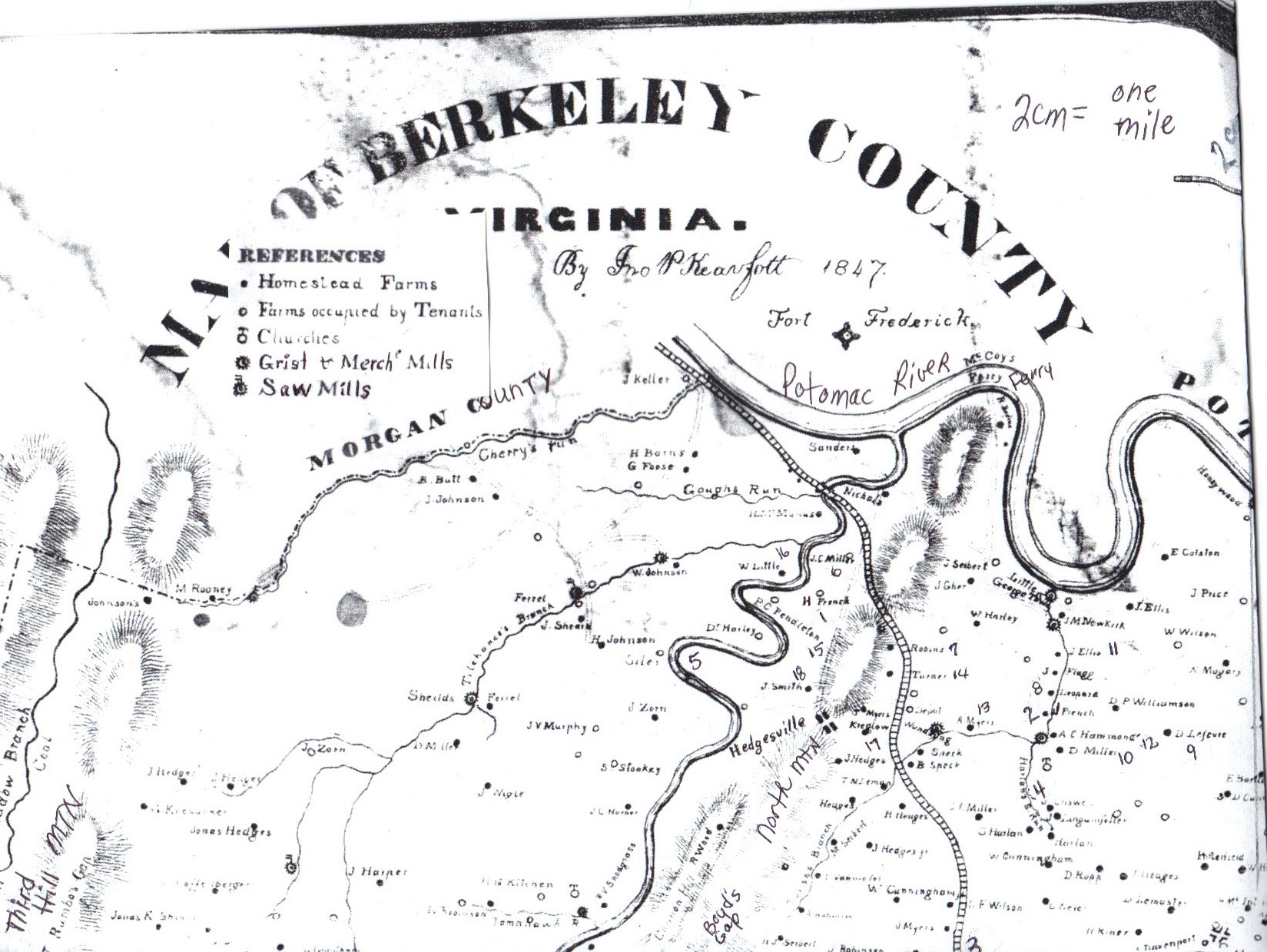
Going due west from Philadelphia along the Pennsylvania border is Antrim, Franklin Co., PA, where the French familyÕs first records appear in 1743. Thereafter, the family remained mostly in Maryland and in Berkeley Co., VA (now WV). One can see that Franklin County, PA is just north of Washington and Frederick Counties in Maryland, which are just north of Berkeley and Jefferson Counties in West Virginia.
Lancaster and Antrim are in Pennsylvania. Hagerstown is in Maryland. Middletown is in Virginia. Hedgesville, Berkeley, and Martinsburg are in West Virginia. Most of the DNA Testers from DNA Test Group 4 named French came from these areas.
The surname French is no longer shown in the early tax list of Antrim, Franklin Co., PA, by 1751, but Jacob Snively and John Snively are listed, thereby indicating that Louise French Snively still lived in Antrim.

Louise French appears as an early settler Antrim township, Cumberland County (now Franklin County), Pennsylvania in 1743 when she married John Snively. Jacob French, her brother, appears in Antrim in 1747 when he buys land with Magdalena Snively, the sister of John Snively. George French is naturalized in Annapolis, Maryland, in 1747. The surname French is no longer shown in the early tax list of Antrim, Franklin Co., PA, by 1751; therefore, the family resided there only 5 years or less. German settlers followed the early Scotch-Irish to Antrim. The GermansÕ basic reason for leaving their homeland was to find religious freedom and as they moved into this frontier region along with and after the Scotch-Irish, they, too, acquired lands and became the leading farmers of the local area [61].
Go to ÒHistory of Franklin County, PennsylvaniaÓ: http://files.usgwarchives.net/pa/franklin/history/local/wbeers005.txt

The Snively family was closely connected to the French family; they came from Lancaster, but so far we have no indication that the French family ever lived in Lancaster, but the two families Snively and French did meet in Antrim, PA, in 1743.
The French family then moved to to Frederick Co., Maryland where only 3 men with the surname French are listed on ancestry.com: Jacob French in 1752, Peter French in 1759, and George French in 1776.
Go to ÒHistory of Washington and Frederick Counties,
MarylandÓ: http://en.wikipedia.org/wiki/Washington_County,_Maryland

The French family moved lastly to Berkeley Co., West Virginia, where they stayed for quite a long time.
Go to ÒHistory of Berkeley County, West VirginiaÓ: http://en.wikipedia.org/wiki/Berkeley_County,_West_Virginia

Berkeley County West Virginia Surname Migrations:
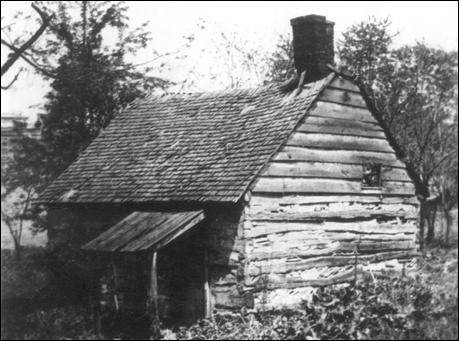
Berkeley County is the second oldest county in West Virginia and was created (while part of the state of Virginia) in 1772 from the northern third of Frederick County, VA. The county seat was established in the colonial village of Martinsburg and was incorporated in 1778. During the Civil War, Berkeley County, still a part of Virginia, experienced conflict and much destruction, as did other areas, and families became divided. After November 1863, Berkeley County became part of the new state of West Virginia. Many Quakers and Scotch-Irish Presbyterians, along with the English and Dutch, became residents there in the early 1700s. The county has a long history and includes many historic and architecturally-important buildings. The old French House is a stone farmhouse built ca. 1830 at 789 French Road in Jefferson Co., WV 25442. Today this is considered Shepherdstown, the oldest town in the state of West Virginia.

Berkeley County was taken in part from the County of Frederick, Virginia and made its historic entry as a county on 15 May 1772, just the year after Jacob 2nd acquired land there in 1771. Besides Frederick County, Berkeley County also took in present Jefferson County until 1801, which was part of Orange County, VA in 1738. Orange County was from the vast territory of Spotsylvania County, VA, in 1734.
Just before the Revolutionary War, the Pennsylvania Dutch German settlers had started to move to Berkeley County. These were of the Lutheran/Reformed faith. They acquired large holdings in some of the best agricultural areas of the county, and the county took on more of a southern influence even though it came through the Pennsylvania Dutch from Maryland and Pennsylvania. Small plantations were established with slave labor. Native limestone was the principal building material. The placement of their main buildings was generally near a stream. Hedgesville was established in 1832. The Baltimore and Ohio Railroad was built in 1844 and brought faster transportation. Mill Creek had the largest concentration of mills with 15. They varied in their produce from grinding grain, flour, sawing lumber, grinding plaster, woolen mills, and paper mills. In the early 1800s, many of Berkeley CountyÕs sons and daughters did not have enough land, and they began to move to the Kentucky and the Ohio area, in particular Ohio from 1810 to 1840, as witnessed by this French family. For further information on Berkeley Co., WV, read the National Register of Historic Places.