
French Family Association
The Official Website of the Surname French
Famous Frenches
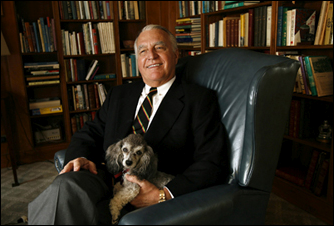
Dr. Ronald J. French
King of Mardi Gras in New
Orleans
Last updated by Mara French on 8/9/11. Send corrections or additions to Mara French
Contents
Dr. Ronald J. French to reign as Rex, King of Mardi Gras in 2007 in New Orleans
Ancestry of Dr. Ronald J. French
What was the Religion of the French family?
Who was Buried at the Green Hill Cemetery in Amsterdam, NY?
Other Cemetery Records in Amsterdam, NY
History of the Town of Amsterdam, NY
Who Was the Father of John S. French?
Dr. Ronald J. French to reign as Rex, King of Mardi Gras in 2007 in New Orleans
by John Pope of the The Times-Picayune
To hasten his recovery from surgery last year to repair a separated right shoulder, Dr. Ronald French added arm exercises to his morning walk through Audubon Park. During that daily five-mile constitutional, the husky ear, nose and throat specialist would repeatedly put his right arm in front of his torso and move it in a graceful lateral arc, as if he were executing a slow tennis backhand.
Last fall, French abruptly dropped that regimen, not because he was 100 percent healed but because, ever wise to the ways of Carnival-crazed Uptown gossips, he realized a passerby might conclude that he was rehearsing a particular monarch's trademark wave of the scepter.
From October on, that inference would have been on the mark. For October was the month when French, 68, was tapped to reign Tuesday as Rex, king of Carnival, and he wanted to be sure that he did nothing to divulge the secret, even if it might mean slowing his recovery.
The prospect of riding as Rex made him flash an even bigger-than-usual smile as he settled into a butterscotch-colored Barcelona chair in his Uptown home a few days before Fat Tuesday.
"What a thrill it is," he said. "It's sort of like buying the winning lottery ticket. That's a fantasy that sweeps through your mind from time to time, . . . but it's something you don't dwell on because that interferes with the progress of one's life."
Moments after he sat down, Josephine, a gray toy poodle named for Napoleon Bonaparte's wife, bounded into French's lap, mussing his master's Rex organization tie, a black four-in-hand tie with purple, green and gold stripes.
French views this year's festivities as part of the continuing area-wide recovery from Hurricane Katrina's devastation.
"I feel like this is a chance to tell the world that we have survived, we have come back, we're ready to return to being the greatest host city in the world.
"It's time to thank the world for all the help they've given us and are continuing to give us and to welcome everybody who had been to the city in the past year and will be here, because we're going to need them."
A Family Tradition
Although French over the years may have put aside thoughts of holding Carnival's top spot, he comes to the throne steeped in the annual tradition. His wife, Flora Fenner French, was Rex's queen in 1959, and her father, Darwin Fenner, was Rex in 1955 and the Rex organization's captain in 1960, when the krewe introduced Carnival doubloons, touching off a craze that has continued for nearly a half-century and has morphed into a focus for collectors.
"It rained when he paraded in 1955," Flora French said. "He had to come home and dry off the train, so one of my cousins and I sat on the floor with towels and mopped up the train so it would be dry for the Rex ball."
Fenner, who was captain slightly more than a decade, returned two familiar touches to the annual procession - the Boeuf Gras float near the front and His Majesty's Bandwagon at the rear. He also paid for float designer Blaine Kern's trip to Europe to study festival parades. One result of that was supersize fixtures that have become fixtures in other organizations' parades.
Fenner "juiced it up," said a Rex organization member who spoke on condition of traditional Carnival anonymity.
A portrait of Darwin Fenner occupies a commanding spot in the Frenches' house, which is festooned with Mardi Gras paraphernalia. In the dining room, a long table is flanked by two highly polished antique side tables: One has doubloons scattered over it; on the other, beads encircle two flower-filled silver urns.
The dining table is long because at supper each Monday it must accommodate the couple, their five sons, their wives and eight grandchildren. From one end to the other, the tabletop is strewn with crowns, coronets, plumes and jesters' caps.
Like other Rexes, French brings a strong résumé of civic involvement to his day of glory. He is director of the Coalition to Restore Coastal Louisiana, and he has been president of the Bureau of Governmental Research, director of the Delgado Community College Foundation and the Louisiana Philharmonic Orchestra, a member of the executive committees of Touro Infirmary and East Jefferson General Hospital, a member of the New Orleans Museum of Art's advisory board and the Louisiana State Racing Commission, and chairman of the Chamber of Commerce's medical-industry council.
"He's intense, he's informed, and he's involved," said Denis McDonald, a former Rex and longtime friend. "He's a Renaissance man. Everything he gets involved in, he studies thoroughly."
French also is a former president of the Louisiana Nature Center board. Bob Thomas, the executive director at the time, was impressed by what French did during the debate over building an amphitheater.
"At one point, someone said that was outside the budget," Thomas said. "Ronnie cleared his throat and said, 'We've got to do it. We'll just add that to the cost,' and we did it. It was named after him.
"For him to say, 'We're going to do it because it's the right thing to do,' is so characteristic."
French, a native of New Iberia, claims as an ancestor of a French surgeon who journeyed to America with a patient, Jean Baptiste Le Moyne, sieur de Bienville, when Bienville founded New Orleans in 1718.
French grew up in Houston but returned to New Orleans to attend Tulane University and never left. After three years of college, he was admitted to medical school.
During his undergraduate years, he met and fell in love with Flora Fenner, who happened to be born on the same August day in 1938. They married in 1960. The first Carnival ball French attended was Rex's in 1959, when she was queen.
"He had a blind date with my best friend," Flora Fenner French said, laughing, "and she's coming back for this one."
During French's Charity Hospital residency, he saw plenty of people struggling for breath, and he was determined to do something about it. So he devised a key-size aluminum-and-steel cylinder that doctors use to perform on-the-spot tracheotomies to open blocked windpipes.
When no one expressed interest in his prototype, French threw it into a desk drawer, where it languished for more than two decades until his son saw it and made an appointment for his father with a patent lawyer.
In two years, the device, called LifeStat, received a patent and Food and Drug Administration approval. Tens of thousands have been sold - the Pentagon snapped up the backlog when the war in Iraq broke out - and it was included in a 2005 exhibit of lifesaving devices at the Museum of Modern Art in New York City.
LifeStat is still a steady seller. The Frenches process the orders themselves and tout it at medical meetings. Another device may be in the works, but French is cagey enough not to want to say anything about it until he gets the patent.
Many Passions
French is humble about his success.
"Every doctor is a tinkerer," he said. "He has ideas that he'd like to do something with."
Whatever French tries, he gets excited about, said Thomas, who holds the Loyola chair in environmental communications at Loyola University.
When he and French were in Alaska several years ago, French was plowing through a paperback version of "Alaska," James Michener's doorstopper of a book about the 49th state. French urged Thomas to read it, and Thomas said he would - as soon as he bought a copy.
At that point, "he ripped the book in half and said, 'You'd better get started now,' " Thomas said. "I've seen him do that many times. I've seen him walking around with a book that's been torn in half, and I know what's happened."
Other passions have included running, tennis and windsurfing, all of which he has been forced to give up because of injuries.
But his latest accident had nothing to do with athletics: He broke his scepter-wielding arm when he fell into a pothole near his home.
The cast came off Wednesday. Because his arm still may be tender, John Weinmann, a former Rex, passed on this bit of advice: Get a light scepter for the parade.
"My recollection was that it was wood," said Weinmann, who reigned in 1996. "By the time I got to Jackson Avenue, that little short stick started to weigh about a ton, and it was simply because I was waving it. He ought to wave with his left hand, or not use a scepter at all." Flora French wants him to smile and wave. "It's fun and festive," she said, "but my mother used to say, in a way, it's just a little bit of foolishness."
John Pope can be reached at jpope@timespicayune.com or at (504) 826-3317.
Ancestry of Dr. Ronald J. French
Dr. Ronald French, a physician from New Iberia, LA, b. Aug 1935, m. Flora Fenner in 1960.
1. Father of John S. French, b. 1780 -- 1805 in NY, his wife was also born in NY.
2. John S. French, b. 9 May 1822 in Amsterdam, Montgomery Co., NY. He lived in Lockport, Niagara Co., NY until 1857 when the family moved to Illinois.
In the 1850 census at age 28, he lived in Lockport, Niagara, NY, in 1860 lived in Norton, Kankakee, IL (very close to Dwight), in 1880 thru 1900 lived in Dwight, Livingston, IL, m1. Lovina ca. 1845, m2. Margaret J. in 1865. Both his parents were born in NY. His first wife, Lovina was b. ca. 1829 in NY. His second wife, Margaret was b. Mar 1835 in Ohio. Both Margaret's parents were born in Wurzburg, Germany.
Lovina had 5 children: Abner, b. 1847 in NY; Joseph, b. 1850 in NY; William, b. 1851 in NY; Angeline, b. 1855 in NY; Jane, b. 1858 in IL. Joseph may have died young as he is not in the 1860 census.
Margaret had 4 children: Katie I. Wyke, b. 1862 in IL, was her daughter by a previous marriage to a man who was born in England, and then with John she had children Maggie, b. 1866 in IL; Charles, b. 1867 in IL; and Hattie, b. 1873 in IL.
John was a tin smith. Margaret was a dressmaker.
Tribes Hill (p.v.) received its name from the circumstance that the
Indian tribes were accustomed to assemble here. It is located on the
N.Y.C.R.R., about five miles west of Amsterdam, on the town line, and contains
two churches, viz., Presbyterian and Methodist; a store, a tin shop, a harness shop, a blacksmith shop, two shoe shops
and about thirty dwellings. About half of the village lies in the town of
Mohawk. Near the village are several large stone quarries from which immense
blocks are now being quarried for the new State Capitol. Stone cutting and
quarrying form the main business of the place. A suspension bridge, 536 feet
between abutments, crosses the Mohawk, connecting this place with Fort Hunter. It was erected by a stock company in 1852-3 at a cost of
$17,500. The bridge is supported by six cables of three
inches in diameter each. The towers are constructed of heavy oak timbers
and the bridge will support 5,000 pounds per foot.
See http://montgomery.nygenweb.net/amster.html.
Margaret (age 65) and John French (age 78) are listed in the 1900 census of Dwight, Livingston Co., IL. Both her parents were born in Germany. At this time, they had 6 living children. Margaret was b. in Mar 1835 in Ohio and John was born in May 1822 in NY.
3. Abner French, b. 27 Feb 1848 in NY (mother was Lovina), lived in Norton, Kankakee, IL, in 1860.
He m. Elizabeth Bechtel; her family all spoke German and Bechtel is a German name. She was b. 1852 in Zurich, Ontario, Canada, d. 24 Aug 1947 in San Antonio, TX.
In the 1850 census of Lockport, Niagara Co., NY, Abner was living with his parents, John and Lovina, and newborn brother Joseph.
In the 1870 census, Elizabeth was 18 and lived in Locust Creek, Linn Co., MO. Abner was 22, living in Baker, Linn Co., MO with the Hale family.
In the 1880 census, Abner was living in Locust Creek, Linn Co., MO, married to Elizabeth, and he was a farmer. They were living with their children: Ella age 7, John age 5, and William age 2.
In the 1900 census of Cavalier, Pembina Co., ND, Abner was living with his wife Elizabeth and their 2 children, William D. French, age 23, and Mable French, age 18.
In the 1910 census of Cavalier, Pembina Co., ND, Abner was married and living alone with his wife Elizabeth.
In the 1920 census, Abner was living in Cavalier, Pembina Co., ND, and it says he was born in NY and so were his parents. Elizabeth's parents were born in Canada. She was born in 1853. They were living with their grandchildren, Elizabeth B. French and John Abner French.
In the 1930 census of San Antonio, Bexar Co., TX, Abner was living with his wife Elizabeth and their grandson, John A. French, age 23, b. ca. 1907.
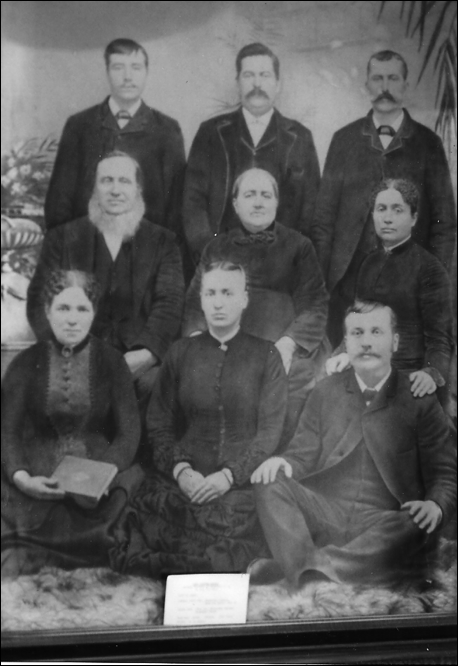 The Bechtel Family, Cavalier, Pembina,
ND
The Bechtel Family, Cavalier, Pembina,
ND
HENRY RIGHTMEYER, RWPA #S14312.
He was born in Glen Township, Montgomery County, New York on January 1, 1763.
He was age 33 when first pensioned on September 20, 1786 for a wound he received
to his left arm in the Battle of Johnstown. He is noted to have first enlisted
in Captain Robert McKeen's Company of Lieutenant
Colonel Henry K. Van Rensselaer's Regiment of Levies in 1779. In 1781, he
enlisted in Captain Garret Putman's Company of Lieutenant Colonel Marinus Willett's Corps and performed duties in Fort Plain
and Fort Windecker, as well as in Johnstown. In 1782
he served in Captain Abner French's Company of
Willett's Corps at Fort Plain, a small fort at Clock's, on the Mohawk
River, Fort House, and Fort Herkimer. His file contains a deposition by
George Rattinour.
GEORGE NOESTEL, RWPA #W16664.
He married, per the records of the Dutch Reformed Church of the German Flatts, on September 25, 1781, Elizabeth Mojer. He served as a private in Captain Simeon
Newell's Company of Lieutenant Colonel Marinus
Willett's Corps in 1781. Theobald Moyer, a stepson of
Elizabeth Moyer, states that Noestel married his
father's widow and that they both served together in Captain Abner French's Company of Willett's Corps as privates. Moyer states that performed duties at Fort Plain, Fort House, &
Ostego Lake.
See http://www.fortklock.com/nylevieswillett.htm
Illinois Civil War Muster and Descriptive Rolls Database:
French, Abner - PVT - Co I - 11 IL US CAV
Residence, Norton, Kankakee Co, IL; Join, 03 Mar 1865- Joliet; Age, 18; Born, NY, mustered out 30 Sep 1865
Height, 5' 4"; Hair, black; Eyes, hazel; Complexion, dark; Farmer
Trans to Co K 5 ILL Cav
French, Abner - PVT - Co K – 5th IL US CAV on 30 Sep 1865
Trans from 11 ILL CAV
Mustered out, 27 Oct 1865
4. William D. French, b. Jan 1877 in Locust Creek, Linn Co., Missouri, m. Louise, probably in 1903 when he was 26. He and Louise had the following children:
Elizabeth B. French, b. 1904 in Clyde, Cavalier Co.,
ND
John Abner French, b. 1906 in Clyde, Cavalier Co., ND
Sadly, William died shortly thereafter between 1907 and 1909, as he is not listed with Louise in the 1910 census; she is listed as widowed.
Louise was b. 1883 in North Dakota and both her parents were born in Canada in an English section.
In the 1900 census of Cavalier, Pembina Co., ND, William was living with his parents and his younger sister Mable French, age 18. William was 23.
5. John Abner French, b. 29 Aug 1906 in Clyde, ND, d. ca. 1979 in Houston, TX.
In the 1910 census of Cavalier, Pembina Co., ND, John Abner French and Elizabeth B. French were living with their mother Louise in North Dakota and she was widowed.
In the 1920 census of Cavalier, Pembina Co., ND, John was living with his grandparents, Abner and Elizabeth as their father, William, had died. John Abner was only 13 and his sister Elizabeth B. was 15, both born in ND and living with their grandparents. John Abner states that his father was born in New York and Elizabeth states that her father was born in Missouri. Both of them state that their mother was born in Canada.
In the 1930 census, John was living with his grandparents, Abner and Elizabeth. He was 23 years old, living in San Antonio, Bexar Co., TX.
6. Ronald J. French, b. 18 Aug 1938 in New Iberia, LA, m. Flora Fenner in 1960, email: ronaldjfrench@aol.com. He states that his own family arrived in NY in the early 19th century, but that the details of his family are very sketchy. His wife works for MLPF&S, Merrill Lynch, Pierce, Fenner, & Smith.
Ronald states: You have my stats right and John Fenner is one of my 5 sons(lots of Frenches). Flora Fenner (MLPFandS) is my wife. My father was John Abner, son of William D, who was the son of Abner, whose father was John S., who, I think, was born on May 9, 1822, in Amsterdam NY.
Flora Fenner’s father was Darwin S. Fenner, b. 12 Jul 1908 in Louisiana and d. Jun 1979 in LA.
7. John Fenner French, plus 4 more sons.
Other Websites
http://www.frenchfamilyassoc.com/FFA/CHARTS/Chart024/
http://www.frenchfamilyassoc.com/FFA/CHARTS/Chart131/
http://montgomery.nygenweb.net/amster.html
What was the Religion of the French family?
The First Reformed Church of Amsterdam, NY, was organized in the early months of the year 1850; therefore, I would assume because the French family were in Amsterdam before that, that they were not connected to the Dutch families, such as Cornelius Van Buren. These families were Dutch and Scottish. See http://montgomery.nygenweb.net/amsterdam/1stRefChHist.html.
Another church in Amsterdam in 1833 was the First Presbyterian Church. Two people with the surname French are listed: Nancy French and Lemuel French. See http://montgomery.nygenweb.net/amsterdam/ampreschurlist.html. Lemuel French was married to Maria Johnson and had son Jacob French, born 30 Jul 1831 and baptized in 1834 at this church. Their next child was Harvey Willis French, b. 23 Apr 1834 and baptized probably at the same time as Jacob. The third child was David, b. 14 Aug 1836 and baptized 26 Mar 1837 at this church. The next child, Edwin, was born to this same couple on 6 Oct 1838 and baptized on 31 Mar 1839. No other French members.
Who was Buried at the Green Hill Cemetery in Amsterdam, NY?
For details, see http://montgomery.nygenweb.net/amster.html and look under “Amsterdam Cemeteries”.
French, William Henry b. Amsterdam, N.Y. d.
8-23-57 aged 1-5-21
French, John M.-son of J.B. b. Amsterdam, N.Y. d.
3-17-61 aged 39-6-0
French, Marion-dau. of
Benjamin b. Amsterdam, N.Y. d. 4-04-62 aged 2-2-
French, Sarah d. 10-26-69 aged 27y.
French, Annie F. (T) dau. of Orran d. 12-08-69 aged
18-5-0
French, Jennie-dau. of B/S.
W. d. 7/3/(13)/70 aged 6m. (sic)
French, Child of H. d. 2-28-74 still born
French, Hannah-wife of Wm. G. d. 9-04-74 60y. b. Glenville
French, Child of B. d. 4-04-75 3d. 12 hrs.
French, Margarette-wife of Joseph d. 4-11-75 81(83)
y. b. N.Y. City
French, Lieut. Geo. W. 1839-1864 U.S. Vol.
Other Cemetery Records in Amsterdam, NY
For details, see http://montgomery.nygenweb.net/cemeteries/amstercem.html.
Phebe French, d. 5/13/1822 in 58th year, wife of John, buried at cemetery on Crane’s Hollow Road. This is a peculiar date, as it was only 4 days after John S. French was born. Perhaps his mother died after childbirth. This shows that Phebe was born in 1764 at age 58, so this in itself proves that she did not die in childbirth.
Samuel French, d. 2-18-1851 in 92nd year, buried
at Shuler Farm Cemetery
Marcy French, d. 11-23-1812 in 52nd year, wife of Samuel, buried at
Shuler Farm Cemetery
Delight French, d. 26-30-1839 in 48th year, daughter of Samuel and
Mary, wife of Israel Loom.
History of the Town of Amsterdam, NY
PROFILE AND HISTORY OF THE TOWN OF AMSTERDAM
From the Gazetteer and Business Directory of Montgomery County, N.Y. 1869-70
Amsterdam, named from the place in Holland from which many of the early settlers came, was formed from Caughnawaga, March 12, 1793. Perth, Fulton County, was taken off in 1838. The original town of Caughnawaga was formed March 7, 1788. It embraced all that part of Montgomery County lying north of the Mohawk and east of a line extending from "The Noses" to Canada. In 1793 it was divided into Amsterdam, Mayfield, Broadalbin and Johnstown, and the original name was discontinued. It lies on the north bank of the Mohawk, in the north-east corner of the County. Its surface consists of the alluvial flats along the river, and a rolling upland, gradually rising for a distance of two miles, and attaining an elevation of 300 to 500 feet. The principle streams are the Fort Johnson, Chuctenunda and Evas Kil Creeks. The first was formerly called Kayaderosseras Creek, and its name was changed in honor of Sir William Johnson, who erected a residence near this stream in 1744, and a saw mill about the same time. It enters the Mohawk about three miles west of Amsterdam village. Chuctenunda, signifying "Twin Sisters", is a name applied to two streams flowing into the Mohawk on opposite sides. Evas Kil was named in honor of Mrs. Eva Van Alstyne, who was wounded and scalped by the Indians in 1755, while crossing this stream. The stream enters the Mohawk near the east border. The soil in the valley is a deep rich alluvium, and upon the hills it is a fertile, gravelly loam. Near Tribes Hill are extensive stone quarries, at which stone is now being quarried for the new State Capitol. Manufacturing is carried on quite extensively at Amsterdam village and at several other places.
Amsterdam, formerly called Veedersburgh, was incorporated April 20, 1830. It is situated on the north bank of the Mohawk, from which the land slopes gradually to the extreme northern limit of the village, then rises more abruptly to the height of 500 feet. The main street runs parallel with the river and is well paved and lighted with gas. The village contains five churches; Presbyterian, Methodist, Baptist, Episcopal and Roman Catholic; an academy, a newspaper office, three banks, four hotels, a large number of manufactories and about 6000 inhabitants.
Who Was the Father of John S. French?
A thought would be to find siblings born after 1822 in Amsterdam, Montgomery Co., NY, AND find a father born ca. 1800 with them who was also born in NY. Of these 6 possibilities below, I would research further these men: Abner and Joseph for a father; and Hannah and Charlotte and Deborah and James for a sibling.
Was his father still living in the 1850 census in Amsterdam of 99 pages?
p. 30, Samuel French, age 92, b. ca. 1758 in NY, farmer, blind, living with Wm Lomis age 29 b. ca. 1821 in NY; Lydia Lomis age 40 b. ca. 1810 in NY; Sarah Lomis age 6 b. ca. 1844 in NY; Marvin Lomis age 5 b. ca. 1845 in NY; Abigal Lomis age 3, b. ca. 1847 in NY; James Chambers age 13 b. ca. 1837 in NY; Hannah French age 30 b. ca. 1820 in NY. From this I would gather that Lomis were in-laws of Samuel. Hannah could have been a sister of John S. French.
p. 44, Abner French, age 68, b. ca. 1782 in NY, laborer, living with Deborah, age 34, b. ca. 1816 in NY. From this I would gather that Deborah was Abner’s daughter and that possibly he had another child named John S. French, b. 1822 in NY.
p. 52, Peter French, age 60, b. ca. 1790 in Canada, living alone.
p. 74, Joseph French, age 55, b. ca. 1795 in NY, Justice of the Peace, living with wife Margaret, age 55 b. 1795 in NY and a daughter Charlotte French, age 30, b. ca. 1820 in NY; and possibly grandchildren Mary age 17 b. ca. 1833 in NY; and James age 14 b. ca. 1836 in NY. No John S. French is listed; however, a John S. French shows up in Lockport, Niagara Co., NY in 1850 at age 28. He could have been a son of Joseph, but there is no proof.
p. 78, James French, age 22, b. ca. 1828 in NY, machinist, living with Martha French, age 25, b. ca. 1825 in NY. The head of household was Nichs Van Voast, age 49, b. ca. 1801 in Y and probably his wife Temperance Van Voast age 52, b. ca. 1798 in NY, and Malinda Browton, age 24, b. ca. 1826 in NY.
p. 96, Nathaniel French, age 30, b. ca. 1820 in MA, a farmer, living with possibly his wife Hulda, age 26, b. ca. 1824 in NY, and possibly their daughter Emily French, age 5, b. ca. 1845 in NY, and possibly the grandfather Enos French, age 52, b. ca. 1798 in MA, and possibly his wife Samantha, age 50, b. ca. 1800 in MA; and Enos age 18, b. ca. 1832 in MA; and Catherine Lawsing age 19, b. ca. 1831 in NY.
Searching Hannah, Charlotte, Deborah, and James for a possible sibling for John S. French
A good possibility would be if we found a sibling in the areas where John S. French resided after Amsterdam, which would be in Illinois, either Norton in Kankakee County, or Dwight in Livingston County.
Hannah was b. ca. 1820 in NY and resided in Amsterdam in 1850, no logical more information found, so this connection is ruled out.
Charlotte was b. ca. 1820 in NY and resided in Amsterdam in 1850, no logical more information found, so this connection is ruled out.
James was b. ca. 1828 in NY and resided in Amsterdam in 1850. There are far too many choices to predict this one. However, in his same family mentioned above on p. 78, I find Martha in the 1880 census still living with Nick Van Vorst who is 80 years old, a widower and a former gardener, born ca. 1800 in NY and both his parents were born in Germany. Martha is listed as married to Oren French, who was b. ca. 1820 in NY, an engineer. Also in this household in 1880 in Amsterdam, Montgomery Co., NY was Charles French, age 18, b. ca. 1862; both of his parents were born in NY. By the 1900 census, Martha is still living in Amsterdam, b. Nov 1826 in NY, age 73, widowed, and giving the middle initial A. In the 1860 census, Martha is living in Amsterdam, stating she was born in Glenville, NY, and living with Nicholas Van Vorst and his wife Temperance, and Orin French b. 1822 in Amsterdam, and Anna French, age 9. From this I would gather that Martha was married to Oren, and that Oren was the brother of James French listed on p. 78 of the 1850 census. So, James was b. in 1828, Oren in 1820, and possibly John C. French could have been a sibling born in 1822.
Deborah was b. ca. 1816 in NY and resided in Amsterdam in 1850, no logical more information found, so this connection is ruled out.
Searching Abner and Joseph for a possible father for John S. French
Son John would have been 8 in the 1830 census. There are 21 pages of heads of families living in Amsterdam, and 5 have the surname French: Joseph, Samuel, John, Samuel, and Abner. Of these 5, only 4 have a son aged 8. Then, going by a “name” theory, only Samuel wasn’t used, which takes us down to 3: Joseph, John, and Abner. Below is the 1830 census.
Joseph (on page 9 of 42 in Amsterdam)
Male under 5 = 0
Male 5 to 10 = 1 (possible son John S. French)
Male 10-15 = 1, female = 1 (this could be an older sister)
Male 15-20 = 0
Male 20-30 = 0
Male 30-40 = 1, female = 1 (this could be John S. French’s parents, b.
1790-1800.
Samuel French (on page 33 of 42 in Amsterdam)
Male under 5 = 1 (younger brother), female =1
Male 5 to 10 = 1 (possible son John S. French)
Male 10-15 = 0, female = 1
Male 15-20 = 1
Male 20-30 = 2 (father + one other), female = 1 (mother)
John French (on page 33 of 42 in Amsterdam)
Male under 5 = 1 (younger brother)
Male 5 to 10 = 1 (possible son John S. French)
Male 10-15 = 0
Male 15-20 = 0
Male 20-30 = 0, female = 1 (wife)
Male 30-40 = 1 (father)
Samuel French (on page 37 of 42 in Amsterdam)
Male under 5 = 0
Male 5 to 10 = 0 (no son John S. French)
Male 10-15 = 1, female = 1
Male 15-20 = 0
Male 20-30 = 1
Male 30-40 = 0, female = 1
Male 70-80 = 1
Abner French (on page 37 of 42 in Amsterdam)
Male under 5 = 0
Male 5 to 10 = 1 (possible son John S. French)
Male 10-15 = 0, female =1
Male 15-20 = 1
Male 20-30 = 0
Male 30-40 = 0
Males 40-50 = 1, female = 1
By the 1840 census, John S. French had not yet married Lovina; therefore, he might still be in the Amsterdam census living with his parents, age 18. Looking at the 3 mostly likely candidates:
Joseph was still in Amsterdam with 2 sons aged 15-19; these were his oldest children. Both he and his wife were aged 40-49, and they had 5 more younger children. This could mean that by the 1850 census, John S. French had moved to Lockport, Niagara Co., NY, while Joseph remained in Amsterdam.
John is not listed in the 1840 census in Amsterdam, which could mean he died or moved. There are 25 other men named John in NY who could be the father of John S. French. None live in Niagara County. Only 1 lives in Montgomery County in the township of Florida which is very close to Amsterdam. Here he did have a son aged 15-19, and he was the youngest son. Both parents were aged 50-59; therefore born 1880-1990.
Abner was still in Amsterdam with no sons age 18; he only had 1 daughter aged 20-29 and he and his wife were both aged 50-59; therefore born 1880-1890. So, researching Abner more, we could check for a son John S. French living in Lockport, Niagara, NY in 1840 where he was in the 1850 census. There was a man named “Prosper French” living in Lockport, the only one in 1840. Checking for John S. French throughout the U.S. in 1840, there are 4 and none live in NY. Therefore, I would think that John still lived at home. Therefore, I would rule out Abner, but perhaps he could have been an uncle of John S. French.
By the 1850 census, there is no surname French in Amsterdam; in fact, there is no surname French in Montgomery County who was born in Montgomery County, but there are many others listed who were born in NY itself, and living in Amsterdam in 1850: Samuel b. 1758, Abner b. 1782, Margaret b. 1795, Joseph b. 1795. All the others were born too late to be parents of John S. French. The Samuel who is listed as born in 1758 in NY was living with the Lomis family and with Hannah French, age 30, born in 1820, who could have been a sister to John S. French. The Abner who is listed as born in 1782 in NY, was living with Deborah French, age 34, born in 1816, who could have been a sister to John S. French. The Margaret who is listed as born in 1795 could have been the mother of John S. French, and she is listed with Joseph French, b. 1795, who could have been the father of John S. French. Also listed are Charlotte French, age 30, born 1820 who could have been a sister of John S. French. Also listed in Mary, 17, born 1833 in NY, and James, 14, born 1836, who could have been siblings.
In the 1850 census of Lockport, Niagara, NY, we find 17 head of household men or women named French. John S. French is listed with his wife Lovina and children Abner and Joseph. So, how many others are listed in Lockport who were born ca. 1822 in NY: only David French who was b. 1817 in NY, and could have been a brother to John S. French; no others. No man named French is old enough in the 1850 census of Lockport to be the father of John S. French; therefore, I would assume John’s father remained in Montgomery County or died.
Now, going back to the David French listed above, I find another David French living in Florida, Montgomery co., NY, in the 1850 census who states he was b. ca. 1813. There he is living with various people, including perhaps his wife Rachel, children Mary, 7, and Samuel 5, and a lady named Rachel Radley who is 88 years old and presumably the mother of his wife Rachel.
Possibilities of 2 Men Who Could Be the Father of John S. French
The parents of Joseph French were born in NY. There was a Joseph French in the 1790 census of NY as living in Mohawk, Montgomery Co., NY. Also in the 1790 census in Mohawk is Abner French, Ebenezer French, and Samuel French who might also be Joseph's father.
Joseph French, b. 1797 in NY
In the 1850 census of Amsterdam, Montgomery Co., NY, Joseph is living with his wife Margaret and daughter Charlotte, age 30, b. 1820 in NY. Also daughter Mary, age 17, b. 1833 in NY. Also James, age 14, b. 1836 in NY. You’ll notice that the names match with the next census record, but not the dates.
In the 1870 census of Amsterdam, Montgomery Co., NY, Joseph is living with his wife Margaret and daughter Sherlott, age 49, b. 1821 in NY. Also daughter Mary, age 32, b. 1838 in NY. Also James, age 28, b. 1842 in NY.
In the 1880 census, Joseph is 83 and living in Amsterdam, Montgomery Co., NY, with his daughter Charlotte French and Joseph lists his parents as both born in NY. His daughter Charlotte, b. 1823 (age 57) in NY, was also in the household in 1880 in Amsterdam, Montgomery Co., NY, and so was her sister Mary, b. 1834 (age 46) in NY, and James, b. 1837 (age 43) in NY. Apparently none of these children married as they are living with their father and no spouses are mentioned.
Daughter Sherlott French (or Charlotte), b. 1821 in NY, immediately before a “possible” son John S. French was born.
Not once is a son John S. French mentioned as a son, so I would rule out Joseph.
Joseph m. Margaret, b. 1794, who died on 12 Apr 1875 in Amsterdam, NY, in the 81st year of her life. See http://montgomery.nygenweb.net/vitals/1870smontnewsvitals.html.
John French, b. 1796 in NY
In the 1880 census, John is living in Florida (next to Amsterdam) in NY with his in-laws with the surname Wiley; John was a widower. There is also a John French b. 1788 in NY living in the 1850 census in Florida, Montgomery Co., NY. Other than that, many men were named John born ca. 1796 in NY, and who would it be? Only these 2 men named John were living in Montgomery Co., NY, but John S. French’s father could be one of the other men named John. I would assume he remained in New York where he probably died. But, he could have moved to Norton, Kankakee Co., IL by 1860 where his son lived, but the search results turn up zero. I did find that a John French of Florida, NY, died of a fever on 12 May 1864 – so who is the other John French of NY who was b. 1796 and 1788? See: http://www.fortklock.com/beersmoncoch25.htm.
Check http://markdionne.com/frederickfrench.html.
Other possible connections:
In May of 1781 Joseph Cooper, who was b. in Monmouth Co., NJ on 25 Dec 1760, enlisted in Captain Abner French's Company of Lieutenant Colonel Marinus Willett's Corps of Levies and marched from the Town of Florida in Montgomery County to Stone Arabia and from there to Fort Plain before returning to Stone Arabia where he was discharged after serving for four months. His file contains a deposition by William Shute with whom he enlisted & served in Captain French's Company.
JOHN FRENCH, RWPA #R3794. He was born at Morristown, New Jersey on March 2, 1749. He served as a sergeant in Captain O'Hara's Company of Colonel Cornelius Van Veghten. He also served as a member of General George Washington's Life Guard. In the Battle of Stony Point (a.k.a. Ver Planck's Point) he received a bayonet wound in the left hand. In 1779 [October of 1780?] he was out to Fort Stanwix under the command of Captain Phillips and states that while there they were sent out on an assignment during which they were ambushed and but four of the detachment were killed or taken; John received a scalp wound in the skirmish, but was able to escape by killing his assailant.
JOSEPH FRENCH, RWPA #S9900. He was born in Philip's Patent of Dutchess County, New York on September 26, 1760, a son of Ebenezer French and a brother of John French. In February of 1777 he and his father moved from New Britain, New York to Warrensbush in Montgomery County, New York. He once served as a teamster in the New York Line in the place of John French. He served as a private in Captain Martin Beebee's Company of the Kings District Regiment of Albany County Militia and fought in the Battles of Bemis Heights and Stillwater. He states that Lieutenant John Van Ness and Captain David Van Ness of the Kinderhook District Regiment of Albany County Militia were brothers. After moving to Warrensbush he enlisted in Captain Joseph Yeoman's Company of the Mohawk District Regiment of Tryon County Militia. Joseph states the Johnstown Jail was picketed. He states that the Sacondago Blockhouse was located about 2½ miles from the Sacondago River. He also performed tours at Stone Arabia, Fort Dayton, and Fort Stanwix. He was stationed in the Middle Schoharie Fort where Jellis Fonda was acting as adjutant when it was besieged in October of 1780, and took part in the pursuit of Sir John Johnson to Fort Herkimer. He did not fight in the Battles of Johnstown or Turlough, but assisted in burying the dead of the Johnstown Battle. His file contains depositions by George Stein and Thomas Tallman. [M805].
No French is listed in the 1790 census of Amsterdam.
Surname French in 1855 New York State Census Index of the Town of Amsterdam
First Election District, Montgomery County, New York
Website: http://www.newhorizonsgenealogicalservices.com/1855-census-ny-montgomery-amsterdam-1ed-index.htm
showing page and line:
FRENCH, Enos 41 42
FRENCH,
Frederick 23 35
FRENCH, Louisa 23 36
FRENCH, Martha 12 39
FRENCH, Oren 12 37
FRENCH, Samanth 41 43
FRENCH, Samuel 23 33
FRENCH, Samuel 26 37
FRENCH, Sarah 26 38
FRENCH, Sarah
Ann 23 34
Second Election District, Montgomery County, New York
showing page and line:
FRENCH, Abigal J. 27 31
FRENCH, Abner 32 40
FRENCH,
Benjamin 13 12
FRENCH,
Charlotte 13 11
FRENCH,
Frederick 7 55
FRENCH, Hannah 7 4
FRENCH, Hannah 27 28
FRENCH, James 13 14
FRENCH, Jedidah 27 32
FRENCH, Joseph 13 9
FRENCH, Loeza 7 6
FRENCH,
Margaret 13 10
FRENCH, Marvin
H. 27 30
FRENCH, Mary 13 13
FRENCH, Samuel 7 3
FRENCH, Sarah
L. 27 29
Surname French in 1800 Census of the Town of Amsterdam, NY
1st No.-Males under the age of 10 years
2nd
No.-Males between the age of 10-16 years
3rd No.-Males between the age of
16-26 years
4th No.-Males between the age of 26-45 years
5th
No.-Males over the age of 45 years
6th No.-Females under the age of 10
years
7th No.-Females between the age of 10-16 years
8th
No.-Females between the age of 16-26 years
9th No.-Females between the
age of 26- 45 years
10th No.-Females over the age of 45 years
11th
No.-All other free persons
12th No.-Slaves
French,
Samuel--2-0-0-1-0--2-0-0-1-0--0-0
(none others)
2 males under age 10 (could be father of John S.
French)
1 male age 26-45 (Samuel)
2 females under age 10
1 female age 26-45 (wife)